Apple has updated the Developer Program License Agreement with new rules on how third-party accessories should handle directed notifications and Live Activities. Here are the details.
Some Context
Earlier today, we reported that a new code indicating upcoming Live Activities support for third-party accessories in Europe was introduced in iOS 26.5 beta 1.
The notification forwarding feature, which will allow third-party accessories to display iPhone notifications, will only be offered to EU users under the interoperability requirements of the Digital Markets Act.
Last year, Apple stated in a press release that the DMA would not only lead to delays in the rollout of new features in Europe but would also bring "new privacy and security threats." Here is Apple's statement:
“The DMA also allows other companies to request access to user data and the core technologies of Apple products. Apple is almost forced to comply with nearly every request, even if it poses serious risks to our users.
So far, companies have requested access to the most sensitive data on a user's iPhone. The most concerning include:
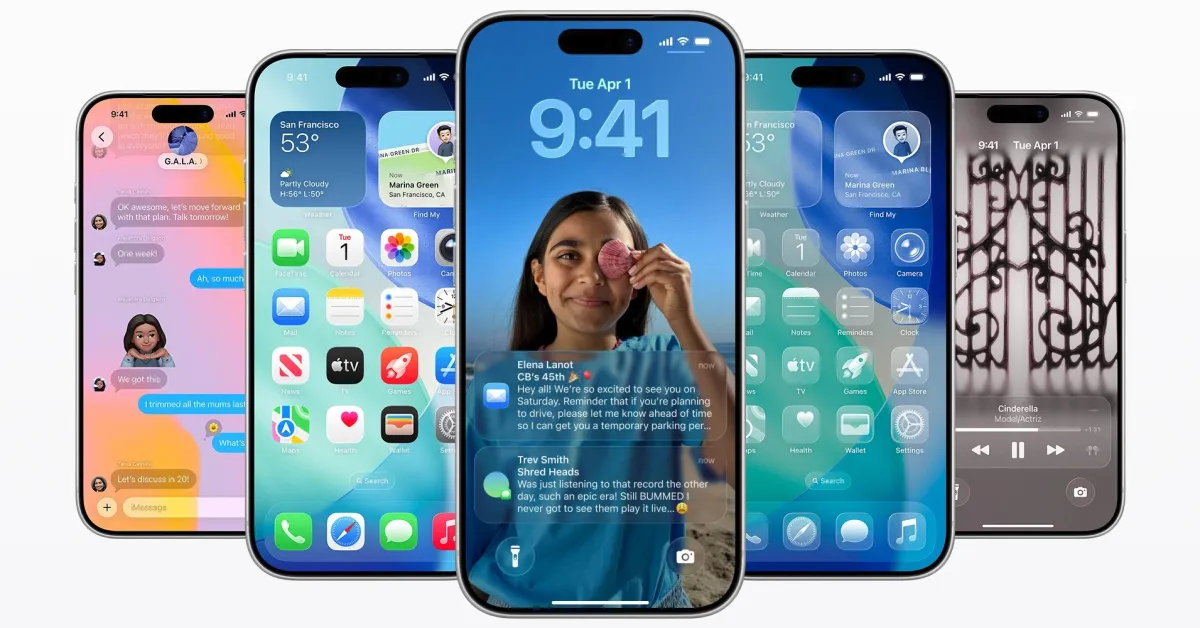
All of a user's notifications: This data includes the content of a user's messages, emails, medical alerts, and other notifications received. And this would expose data that even Apple cannot currently access to other companies.”
In other words, Apple argued that it designed iOS in a way that it cannot access the content of notifications, but if it has to expose this data to third-party devices, the same would not apply.
As of today, this argument is no longer valid, and Apple is working to open this access as required by the DMA.
Apple Announced Strict Rules for Notification and Live Activity Forwarding
Earlier this morning, Apple updated the Developer Program License Agreement with a new section, among other things: 3.3.3 (J), Accessory Notification Framework and Accessory Live Activities Framework.
In this section, Apple states that third parties “cannot use the Forwarding Information for advertising, profiling, model training, or location tracking.” They are also not allowed to propagate this information to any application or device other than the third-party accessory configured by the user.
The terms also specify:
- Accessories cannot share this data or its associated encryption keys with another device, including the user's own iPhone.
- They also cannot modify the content in a way that alters its meaning beyond what is necessary for proper display.
- Developers are prohibited from remotely storing this data, for example, on cloud servers; it is only allowed when absolutely necessary for the accessory to transmit the data.
- The data can only be used decrypted on the accessory, not anywhere else.
Finally, Apple reminds developers that applications do not need to support the system for sharing data with third-party accessories; this will be controlled by a user-level setting.
Follow this link to read Apple's updated Developer Program License Agreement.
Worth Checking on Amazon
- David Pogue – 'Apple: The First 50 Years'
- MacBook Neo
- Logitech MX Master 4
- AirPods Pro 3
- AirTag (2nd Generation) – 4 Pack
- Apple Watch Series 11
- Wireless CarPlay Adapter










Comments
(2 Comments)