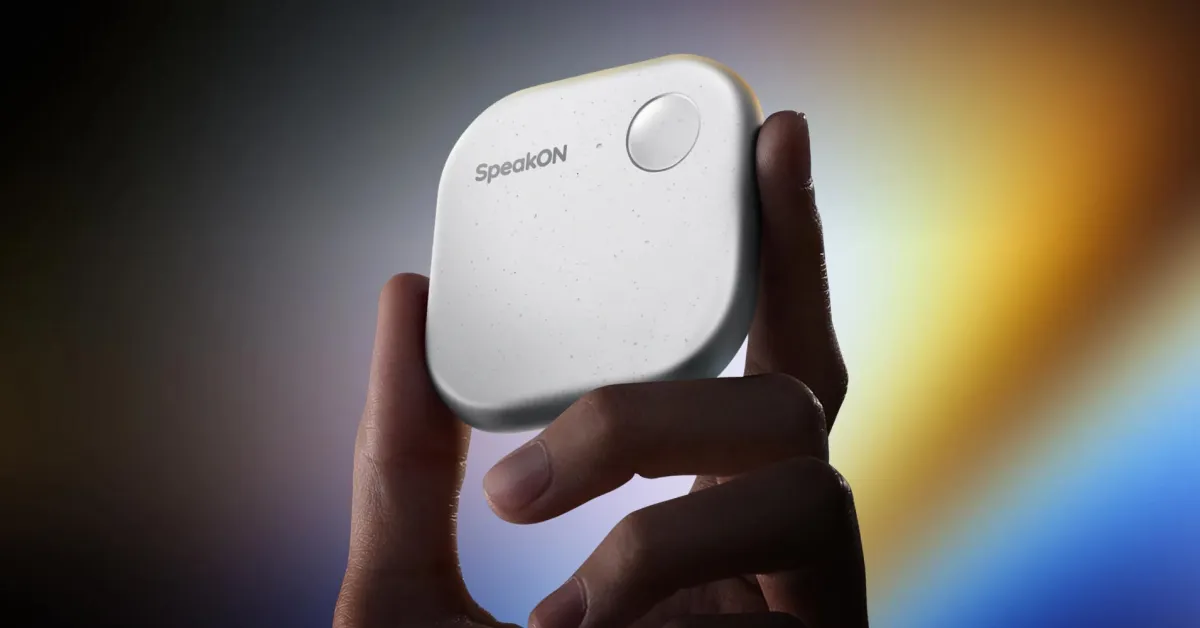
In the last few weeks, I had the opportunity to test SpeakON, a magnetic, AI-powered voice note-taking accessory that attaches to the back of the iPhone and enhances transcriptions based on predefined preferences. Here are my experiences.
‘The world’s first voice typing device for iPhone’
As I have written before, the idea of AI-powered voice interactions greatly fascinates me. I am particularly excited about the possibility of AI agents being able to perform tasks on our behalf across multiple applications.
Although it will take a bit more time for these promises to fully materialize, we are starting to see what these early building blocks look like in practice, especially through more focused, task-oriented devices.
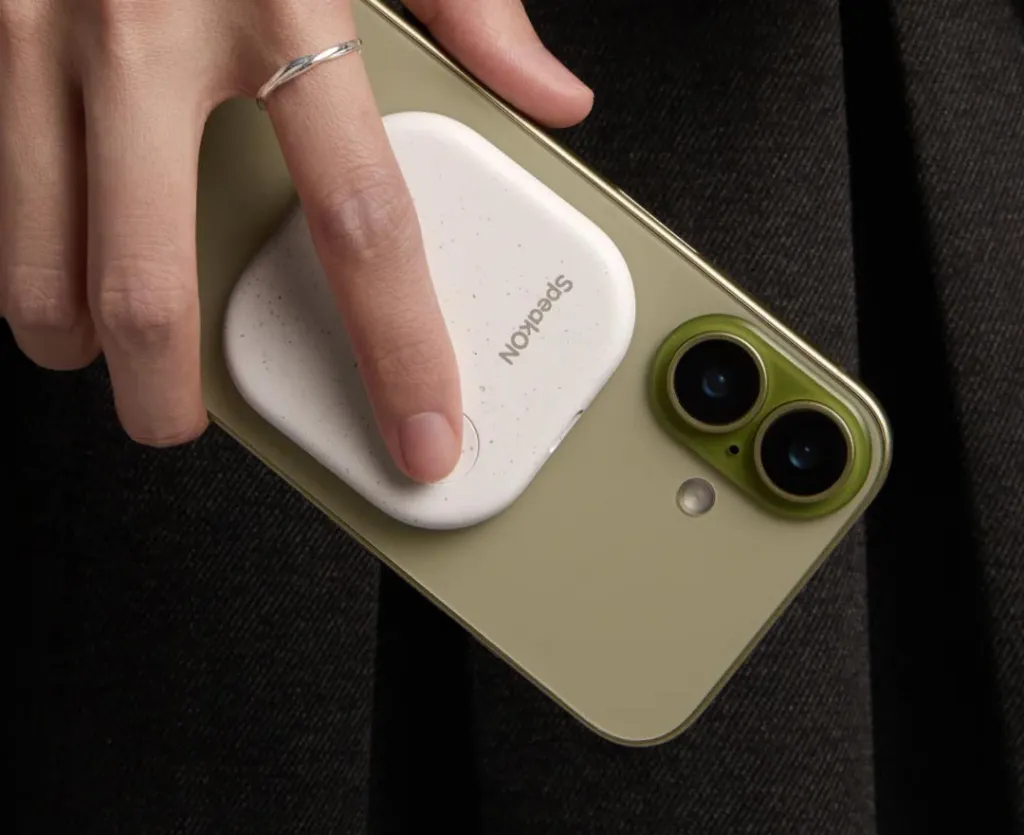
This type of device is SpeakON. It is a magnetic voice note-taking accessory that attaches to the back of the iPhone and serves as a physical shortcut to convert speech directly into text in any application.

SpeakON can instantly transcribe speech and adjust its tone depending on your application. It can also structure your thoughts into lists or easily convert voice notes into text.
I had the opportunity to test SpeakON, and I must first say this: it is quite a challenging task to convince someone to buy a single-purpose AI hardware that many think could just be an app. Especially considering how limited third-party hardware access still is on the iPhone.
Fortunately, that is not my job. My task is to convey my experience, and this experience turned out to be quite positive, more than I expected.
Pros
Setting up SpeakON was extremely easy. Bluetooth pairing worked seamlessly, and the training guide in the SpeakON app was really helpful for learning how to configure the accessory.
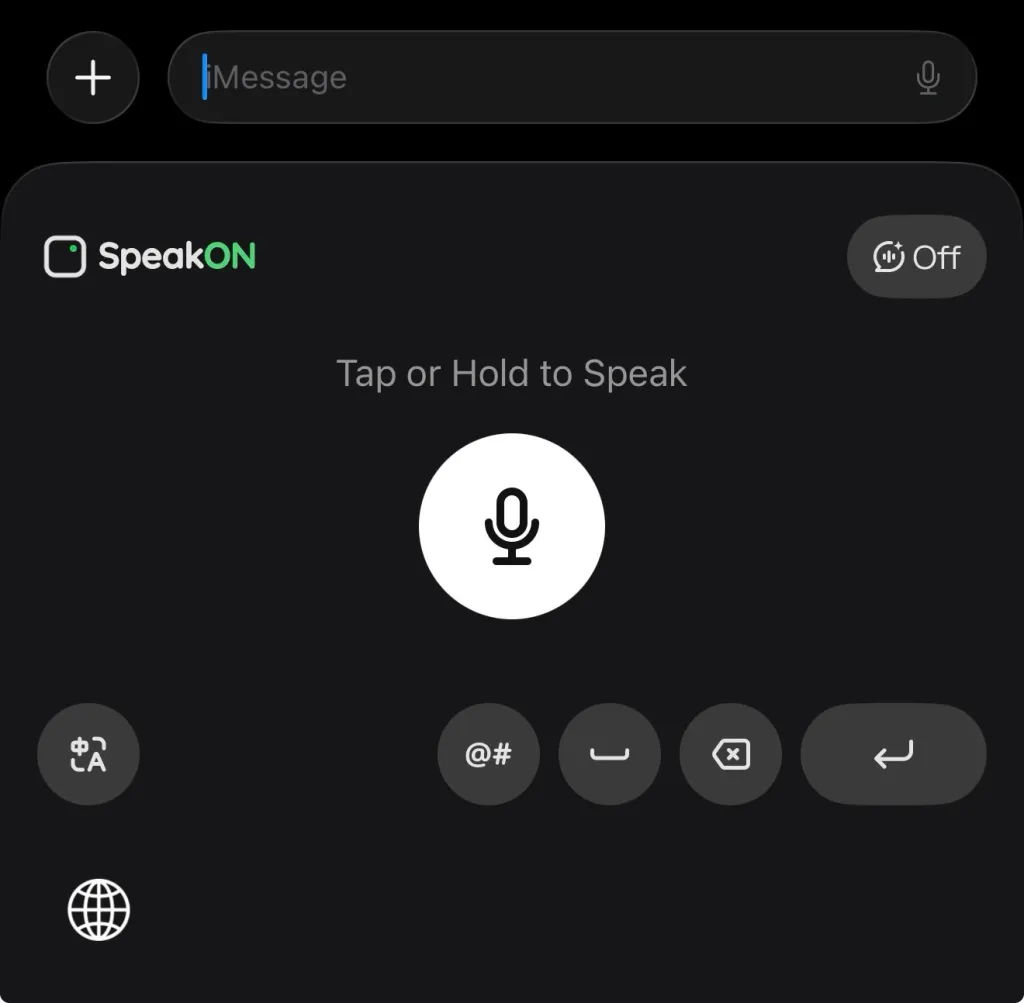
After adding the SpeakON keyboard as one of my iOS keyboards, all I had to do was press the button on the accessory attached to the back of the iPhone to dictate an email, a text message, or a shopping list. During this time, it transcribed by eliminating small errors, filler words, and repetitions.
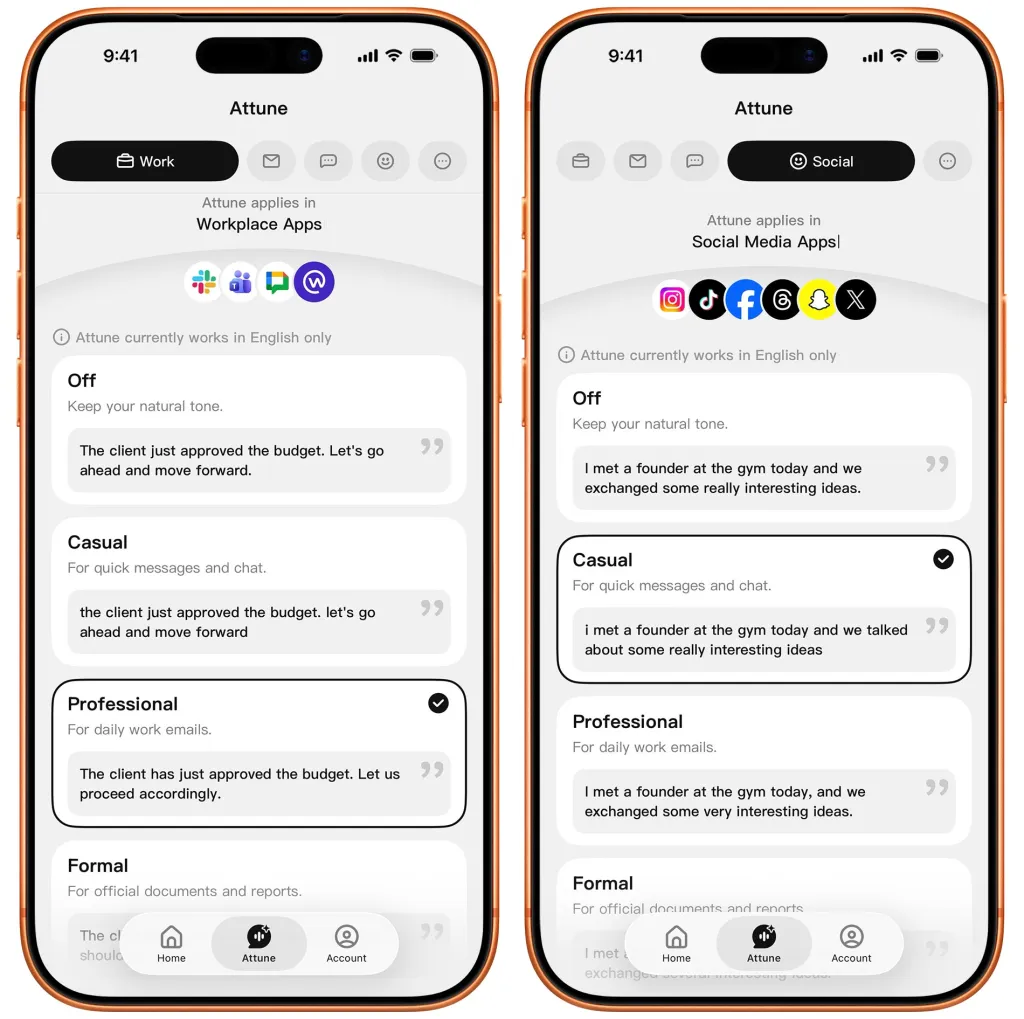
In my experience, SpeakON's greatest strength was the Attune feature, which allows users to select Casual, Professional, or Formal presets to adjust the text based on the application they are using.
A user can set business and email applications to use the Formal Attune preset, while preferring the Casual option for messaging or social apps. There is also an option to completely turn off Attune; in this case, SpeakON cleans the text for fluency and adds correct punctuation marks.
Another great feature is the automatic translation capability. When combined with the cleaning and Attune settings, it did a great job of converting messy voice notes in Portuguese into proper text in English.
In fact, translation shows itself at several points in the SpeakON experience. When you dictate in a different language, a contextual button appears when you dictate in a language different from the one set as the Translation Target in the settings.
Supported languages include English (US, UK), Japanese, Korean, Chinese (Simplified, Traditional), Spanish, French, German, Italian, Portuguese, Russian, and Arabic.
Another advantage is the hardware itself. The magnet is strong, it feels good in hand, it is super lightweight at just 25 grams, and the click feel of the button to activate the microphone is pleasant (the constant vibration feedback is not as nice).
Finally, the company seems to be moving quickly to resolve some issues. They released several software updates during my testing process. In fact, the software updates went smoothly, which is always a comfort when dealing with devices that do not have a screen.
Cons
SpeakON's microphones worked almost flawlessly in quiet environments, but in noisier settings, you may need to bring the device a little closer.
The advantage of the situation is that the user can take the device out of the iPhone and speak closely. However, this somewhat weakens the purpose of the device.
Battery life also became an issue. The company stated that SpeakON can last up to 8.5 days in standby when connected via Bluetooth, and up to 10 days when not connected, also offering recording times of 20 and 23 hours respectively.
However, my experience was not like that; I found that the battery drained much faster even when I wasn't recording. SpeakON charges quickly, but don't forget to keep a USB-C cable with you.
However, frequent software updates come into play here. These updates help address some of these shortcomings. This is always a good sign for a new product.
Midpoints
According to the company, SpeakON is SOC 2 Type II and HIPAA certified. This is great news in terms of privacy, as it shows that the company audits its security controls and adheres to strict rules regarding the processing of sensitive data. However, when I asked which models they used, they declined to answer for security reasons.
However, they assured me, “user data is encrypted both in transit and at rest, and recordings are processed solely to generate text in accordance with our privacy policy. Audio is not used for model training without user consent.”
Another issue for some users is the subscription model; this model restricts key features with usage limits.
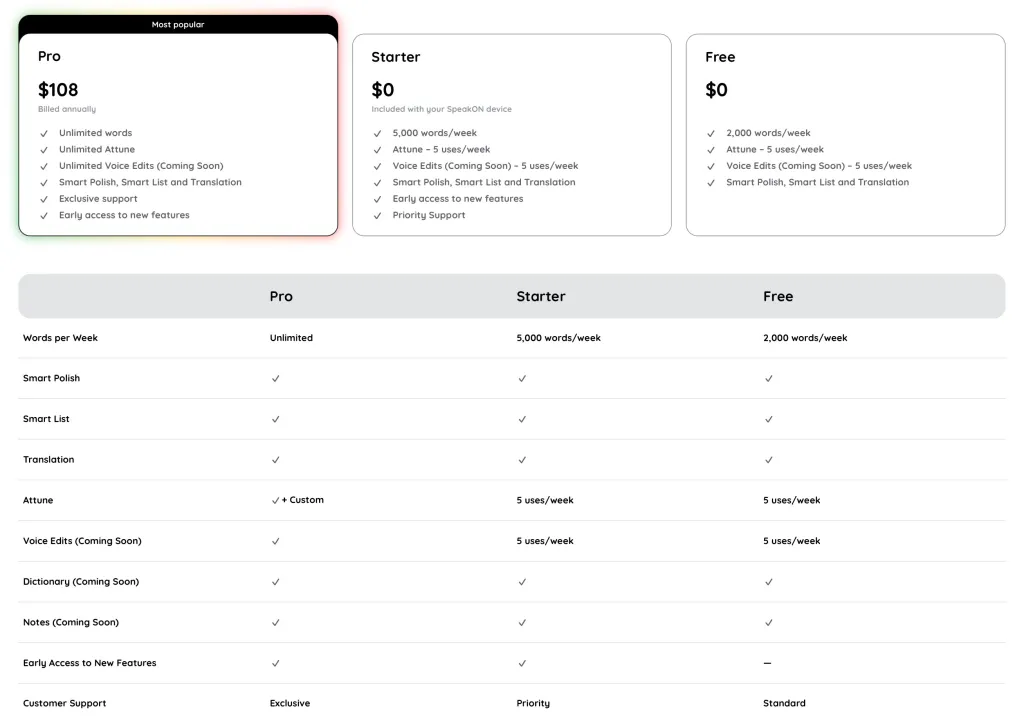
While the device itself costs $129, higher word limits and features like Attune are tied to the Pro plan. This plan costs $108 annually or $12 monthly.
Finally, it may take time to get used to this situation. The ergonomics and the habit of reaching the button on the back of the device may require significant adjustment for some users. It definitely did for me.
And although I couldn't integrate SpeakON into my workflow naturally and effortlessly, this small device convinced me even more that voice interactions have much more potential than many people think. I hope iOS allows for this; however, it still seems like a bit too much of a demand.
Follow this link for more information about SpeakON.


![The CardPointers app can now integrate with ChatGPT and more [50% off]](/resimler/cardpointers-uygulamasi-artik-chatgpt-ve-daha-fazlasi-ile-entegre-olabiliyor-yuzde-50-indirim.webp)




Comments
(8 Comments)