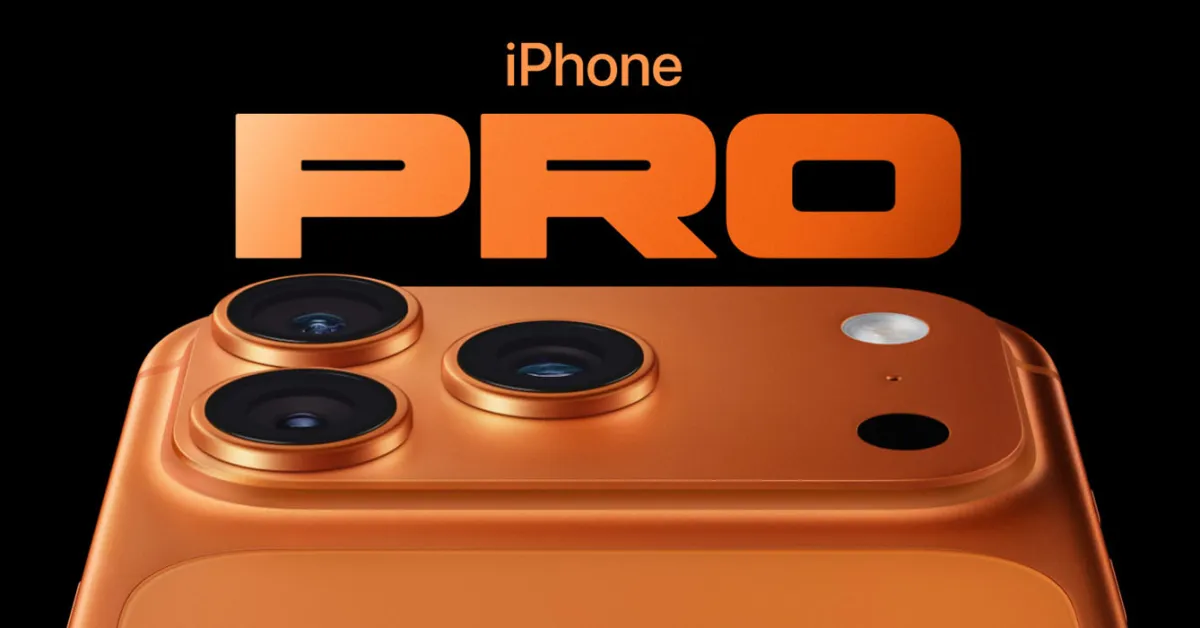
Earlier this year, NASA administrator Jared Isaacman confirmed that astronauts on the Artemis II mission would be allowed to "fly with the latest smartphones." Now, The New York Times has reported what was needed for this to happen.
No connection, just photos and videos
Currently, four iPhone 17 Pro Max devices are heading towards the Moon at a speed of approximately 25,000 miles per hour.
This is not the first time an iPhone has participated in a space mission, but Artemis II is the first mission where NASA has provided each crew member with an iPhone for taking photos and videos.
Apple stated that the iPhones were not involved in the approval process for the Artemis II mission. The company noted that this mission marks the first time an iPhone has been deemed fully suitable for long-term use in orbit and beyond.
In fact, taking photos and videos is nearly the only thing the devices can do, as NASA confirmed to The Times that these devices "cannot connect to the internet or use Bluetooth."
However, getting them approved for flight was not an easy task, according to the report:
“Typically, the process consists of four stages,” said Tobias Niederwieser, assistant research professor at BioServe Space Technologies. The first stage is to introduce the hardware component to a safety panel. The second is to identify potential hazards of the hardware; this ranges from moving parts to materials that can break, like glass. The third stage is to develop a plan to address these hazards. The fourth stage is to prove that the plan works.”
The iPhone 17 Pro Max is equipped with Ceramic Shield 2 on the front and Ceramic Shield on the back. According to Apple, Ceramic Shield 2 is "more durable than any smartphone glass."
However, fragility was not the only factor NASA had to consider, according to the NYT report:
The process aims to protect both the crew and the spacecraft, he said. “In a perfectly sealed capsule in microgravity,” where the effects of gravity are so reduced that objects appear weightless or in free fall, the hardware will operate under conditions very different from those on Earth. For example: NASA discussed using Velcro to mount the phones in the Orion capsule, the agency said. Before launch, at least one phone was placed in the leg pocket of a flight suit.
In the video below, you can watch how an iPhone 17 Pro Max was placed in astronaut Jeremy Hansen's suit:
New iPhones are being placed into the Artemis II Team's suits!
— Owen Sparks (@OwenSparks) April 1, 2026
There’s something very familiar about the look of the iPhone, which will make the Moon accessible, we’ll see the lunar surface through the same lens we capture our lives with every day. pic.twitter.com/sDDM5NSRMX
Despite their special roles, the four iPhones are not the only cameras on board. The crew also has access to four GoPro Hero 11 cameras and two Nikon D5 bodies, one of which captured this stunning image of Earth illuminated by the full moon:
We see our home planet as a whole with magnificent shades of blue and brown. Even a green aurora lights up the atmosphere. We are together as we watch our astronauts journey to the Moon. pic.twitter.com/6JkKufBgtJ
— NASA (@NASA) April 3, 2026
It remains to be seen whether the Artemis II crew will capture equally impressive photos and videos with their iPhones.
You can follow this link to keep track of what the astronauts share.
Worth checking out on Amazon
- David Pogue – 'Apple: The First 50 Years'
- MacBook Neo
- Logitech MX Master 4
- AirPods Pro 3
- AirTag (2nd Generation) – 4 Pack
- Apple Watch Series 11
- Wireless CarPlay adapter




















Comments
(9 Comments)