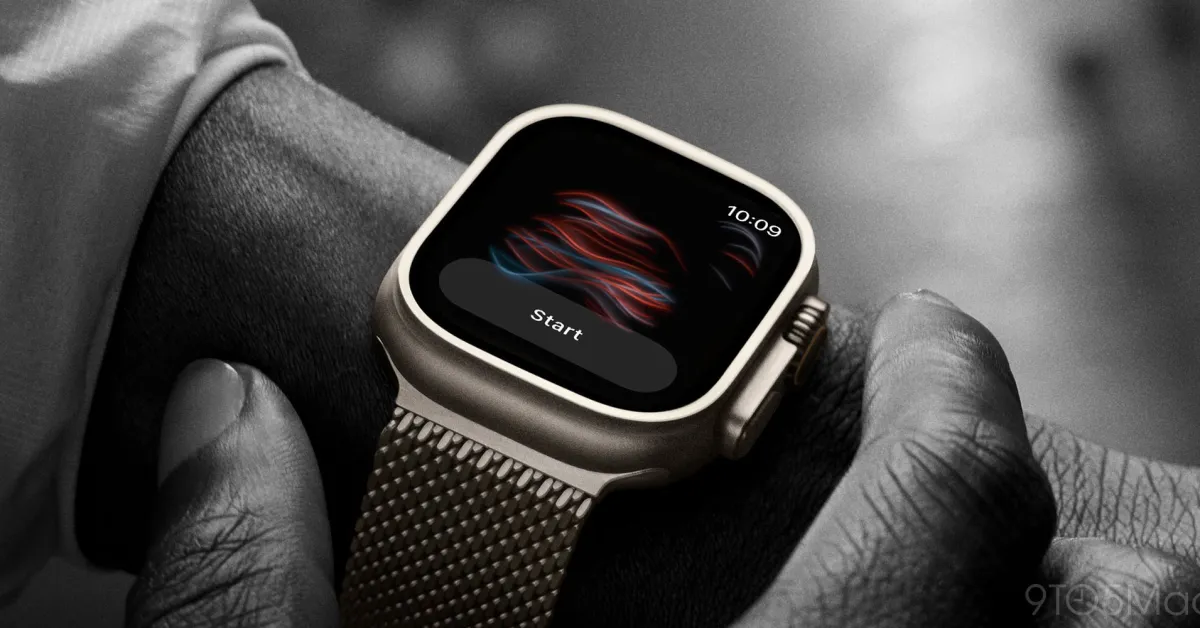
Apple has achieved a significant victory in its ongoing battle with Masimo over patents related to the blood oxygen feature of the Apple Watch. Here are the details.
Some Context
For the past few years, Apple and health technology company Masimo have been engaged in a fierce legal battle over the blood oxygen sensor of the Apple Watch.
Despite numerous rulings and appeals, Apple was forced to disable the technology on Apple Watches in the U.S. and moved much of the process to the iPhone, developing a redesigned version of the feature using data collected by the Apple Watch.
According to the International Trade Commission (ITC), this was sufficient to allow Apple to resell the models of the Apple Watch with the feature enabled in the U.S., as the agency stated that Masimo’s patents were not infringed.
Naturally, Masimo disagreed and filed petitions arguing that Apple’s redesign fell within the scope of the existing exclusion order, and also questioned the U.S. Customs and Border Protection’s decision to approve the updated watches.
This led to two outcomes that we address here:
- Firstly, ITC Administrative Law Judge Monica Bhattacharyya issued an initial ruling that Apple’s redesigned blood oxygen feature on the Apple Watch did not infringe on Masimo’s patents.
- Secondly, the Federal Circuit upheld the ITC’s initial exclusion order; this means that the original blood oxygen feature on the Apple Watch is still banned in the U.S.
Following these rulings, the final step was for the full Commission to decide whether to review the Administrative Law Judge’s finding of no infringement; this brings us to today.
ITC Refused to Review
Earlier today, the ITC refused to review the previous ruling, thus closing the case and denying Masimo’s request to reinstate the import ban on the Apple Watch.
The ruling states that the presiding administrative law judge, the determination of the EID’s implementation start date, and the limited exclusion order of LEO means:
On March 18, 2026, the ALJ published the EID and ultimately concluded that the accused redesigned products did not infringe the claims of the Alleged Patents. On March 25, 2026, both Masimo and Apple filed petitions with the Commission for a review of the EID.
On March 30, 2026, the parties each submitted responses to the relevant petitions. The Commission decided not to review the EID. This consolidated proceeding has been completely concluded with the finding that the accused redesigned products did not infringe the Alleged Patents and therefore, they must not be excluded under the terms of the LEO.
Apple stated in a comment to 9to5Mac:
We thank the ITC for its decision that allows us to continue offering this important health feature to our users. For over six years, Masimo has waged a relentless legal campaign against Apple, and nearly all of its claims have been rejected. We will always defend our innovations and continue to focus on what we do best: providing our users with the best products and services in the world.
The company expressed its satisfaction in continuing to offer the redesigned Blood Oxygen feature to users in the U.S., as well as adding other health features like the ECG app and notifications for hypertension and irregular rhythms.
Apple also emphasized the research and work its teams are doing to improve and provide health, wellness, and safety features in the Apple Watch and other products, ensuring a strong focus on privacy.
Masimo may appeal the decision.






































Comments
(6 Comments)