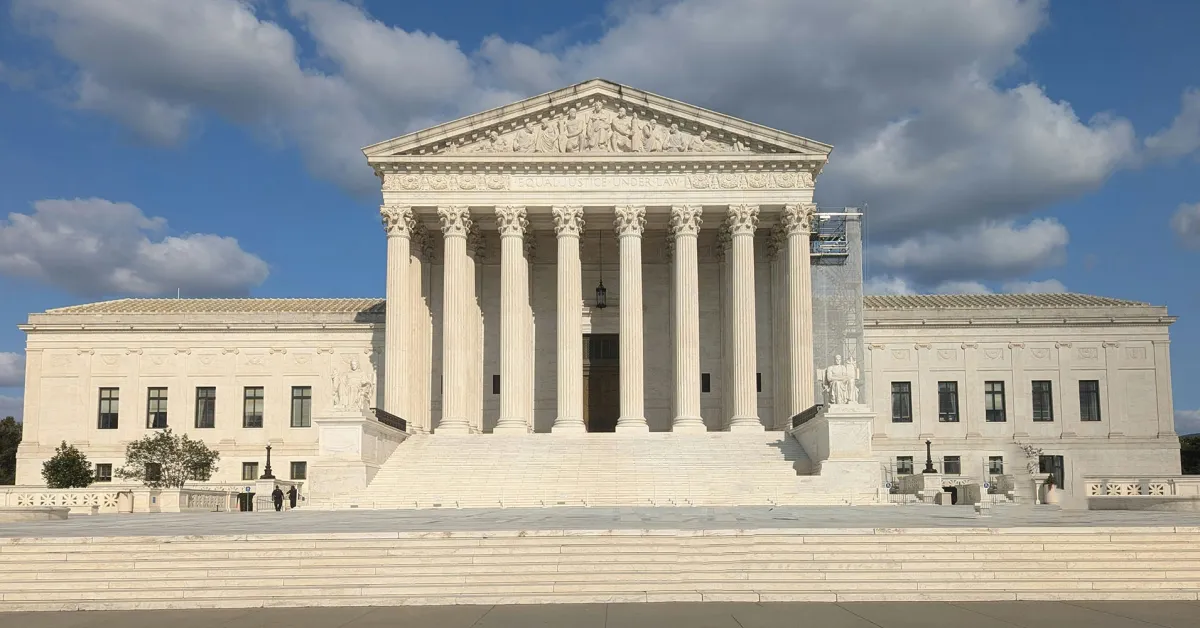
The U.S. Supreme Court is debating whether the practice known as "geofence warrants" is legal. These warrants are sometimes referred to as "digital dragnet" because they collect location data not only from suspected criminals but also from many innocent citizens.
This practice, which clearly raises privacy concerns, increasingly sees tech giants being asked by law enforcement to identify all smartphone users located at a specific place at the time a crime was committed.
CNET explains how geofence warrants work.
If there is no clear suspect for a crime, law enforcement can issue a warrant requesting location data from a tech giant. The police draw a circle around a crime scene on a map and set a time frame. The tech company (most often Google) searches its database for devices within that "border" during that time period. The police can then request specific account information from the company — such as email addresses, phone numbers, and usernames.
Arguments For and Against
The police must have a good reason to believe the information they are requesting is related to a suspect, but in practice, this may amount to nothing more than being in a general location during the time a crime was committed. In the case of a bank robbery, those present included people sitting in a church near the bank.
The Department of Justice argues that smartphone location data should not be classified as "sensitive data" because this information represents public movements that can be observed by others. Additionally, DOJ lawyers state that everyone has the freedom to turn off their location services.
Privacy advocates argue that seeing someone you know at a location is very different from obtaining the identities of hundreds or even thousands of strangers, and they point out that smartphone users can rely on location services in Google Maps or Apple Maps to reach their destinations. Lawyers opposing geofence warrants argue that this practice violates the Fourth Amendment's protections against illegal searches.
What Happens Next?
There are three possibilities, two of which would lead to the same outcome in practice.
First, the Supreme Court may decide that geofence warrants indeed violate the Fourth Amendment and are therefore illegal, at least in their current form.
Second, it may rule that they are legal.
The third and likely most probable outcome is that the court may prefer not to make a decision at all. This would mean that the practice could continue, and thus it would be equivalent to concluding that they are legal — but it can be said that this outcome would at least allow for new arguments on the same subject to be made at a later date.
What do you think about this? Share your thoughts in the comments.
- Official Apple Store on Amazon
- Apple's iPhone cases: iPhone 17 | iPhone 17 Pro and Pro Max | iPhone Air
- Wireless CarPlay adapter (2026 update)
- AirTag holders and accessories
- Mac Pro style Mac mini case
- NordVPN – privacy-focused VPN, no-logs, and verified by independent audits
Photo: Dave Vaill, Unsplash






































Comments
(6 Comments)